
How Daylight Saving Time Affects Life and Economy in 2026
Explore the impact of Daylight Saving Time on life and the economy in 2026, from legislative debates to health and economic effects.
Discover the complexities of US-Mexico border security in 2026, focusing on recent incidents and cooperative strategies.
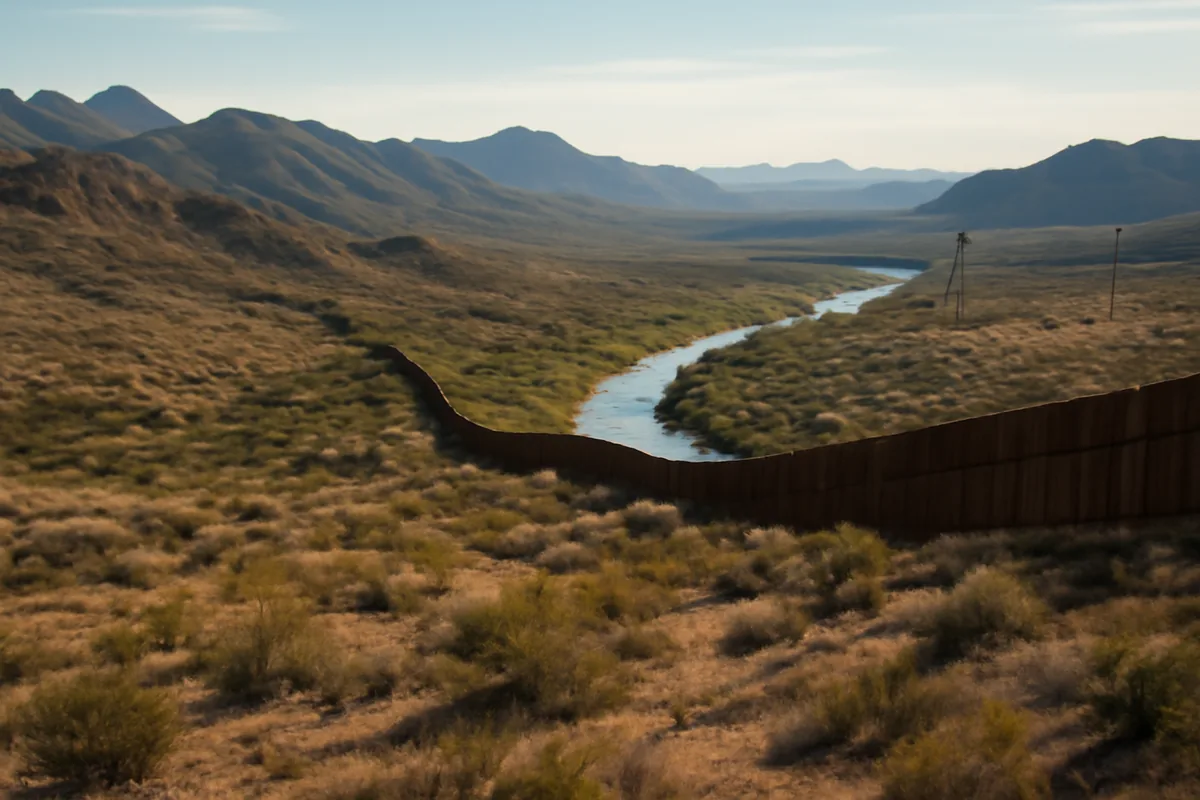
The US-Mexico border has long been a focal point for security concerns, and 2026 is no exception. Recent developments highlight the ongoing challenges and the complex dynamics of securing this vast frontier.
One significant incident involved an exchange of gunfire between US Coast Guard personnel and shooters from the Mexican side of the border near Garceno, Texas. This encounter underscored the heightened tension and increased illegal activities reported in the region. The Coast Guard was part of joint operations intercepting migrants crossing the Rio Grande when the gunfire erupted, prompting a swift response from US and Mexican forces [1][2]. Such incidents are not isolated, reflecting a broader trend of increased violence and illegal activities along the border. According to reports, there has been a 20% increase in cross-border gunfire incidents in 2026 compared to the previous year, indicating a worrying escalation in tensions [1].
Another contributing factor to the volatility is the rise in organized crime activities. Cartels have become more brazen in their operations, often engaging in direct confrontations with law enforcement. These organizations exploit the vastness of the border, which stretches over 1,900 miles, to smuggle drugs, weapons, and people. The fragmented terrain, consisting of deserts, mountains, and rivers, provides numerous hideouts and routes that are difficult to patrol effectively [1].
In response to the incidents, both US and Mexican governments have ramped up military presence along the border. The US has deployed 500 troops, complemented by helicopters, drones, and anti-drone equipment. Meanwhile, Mexico has launched Operation Mirror, deploying its National Guard and Army to bolster security. This joint effort aims to patrol both sides of the border more effectively, disrupt criminal organizations, and ensure community safety [1].
Collaboration between the two nations has evolved significantly. Joint task forces have been established to tackle specific threats, like drug trafficking and human smuggling. These task forces often include not only military personnel but also members of intelligence agencies who focus on data gathering and analysis to predict and prevent criminal activities. Moreover, both countries have increased intelligence sharing, which has led to several successful operations resulting in the capture of high-value targets and the disruption of trafficking networks [1].
Patrolling the US-Mexico border involves numerous challenges, including the vast and varied terrain, which ranges from urban areas to remote deserts. This makes it difficult to monitor all activities effectively. Additionally, the presence of organized crime and human trafficking networks complicates enforcement efforts. The recent gunfire incident highlights the potential for violence, requiring coordinated efforts from both countries to manage these threats [1][2].
To illustrate, the border's geography presents logistical challenges. In urban areas, dense populations and infrastructure provide cover for illegal operations. In contrast, the remote desert and mountainous regions require specialized equipment and vehicles for patrols, which can be costly and logistically challenging to maintain. Furthermore, harsh weather conditions, such as extreme heat and flash flooding, pose additional risks to personnel and equipment. These environmental factors demand well-coordinated logistical planning and resource allocation [1].
Current measures include physical barriers, surveillance technologies, and increased manpower. The US has reinforced physical barriers in strategic areas and invested in advanced surveillance tech like drones and cameras. Joint operations between US and Mexican forces focus on intelligence sharing and coordinated patrols. These measures aim to address both illegal crossings and potential security threats from organized crime [1][2].
The technological aspect of border security has seen significant advancements. For instance, the deployment of aerial drones equipped with night vision and thermal imaging capabilities allows for 24/7 surveillance over vast areas. Additionally, ground sensors and motion detectors are being installed in remote locations to alert border patrols of any unauthorized movement. These technologies are supported by command centers that integrate data from various sources, providing real-time situational awareness and allowing for rapid response to incidents [1].
Political relations between the US and Mexico significantly impact border security strategies. Under US President Donald Trump's administration, there has been a push to increase US influence in Latin America, affecting how border security is approached. Mexican President Claudia Sheinbaum has also emphasized national sovereignty, indicating ongoing diplomatic negotiations in determining border policy [1].
The political landscape has become a critical component of border security. Under the Donroe Doctrine, the US administration has sought to extend its influence in Latin America, which has implications for border policies. This approach has prompted Mexico to assert its sovereignty more robustly, leading to complex diplomatic dialogues. These negotiations often involve discussions about trade, immigration policies, and security cooperation, with each side seeking to balance national interests with regional stability [1].
The US Coast Guard plays a crucial role in border security, especially in waterway surveillance and migrant interception. They are often first responders to incidents, as seen in the recent exchange of gunfire. Their operations are coordinated with other federal agencies, highlighting the need for inter-agency cooperation to address complex security challenges effectively [2].
Coast Guard responsibilities extend beyond interception and include rescue operations and humanitarian assistance. They are tasked with preventing illegal fishing and safeguarding marine resources, further emphasizing their multifaceted role in border security. Additionally, the Coast Guard's presence is crucial in deterring potential threats from criminal organizations that exploit waterways for smuggling operations [2].
Ensuring the safety of border communities is a priority for both nations. Coordinated patrols and intelligence sharing aim to prevent criminal organizations from exploiting border areas. By enhancing security presence and cooperation, the US and Mexico strive to create a safer environment for residents near the border [1][2].
Community safety initiatives often involve local law enforcement agencies and community leaders. These stakeholders play a vital role in providing intelligence and fostering trust between residents and security forces. Programs aimed at community engagement and education about the risks of criminal activities are vital components of these efforts. Furthermore, investments in infrastructure and social services are seen as long-term strategies to stabilize border communities and reduce the appeal of illegal activities [1].
Looking forward, both countries are likely to continue strengthening their collaborative efforts. Advances in technology and increased diplomatic dialogue will shape future security measures. Continued investment in surveillance and infrastructure, along with political negotiations, will play a significant role in the evolving landscape of border security [1][2].
Emerging technologies such as artificial intelligence and machine learning are expected to revolutionize border security operations. AI can enhance threat detection and streamline the decision-making process, allowing for more efficient resource allocation. Additionally, the development of autonomous surveillance systems could provide continuous, low-cost monitoring across extensive areas. These innovations, coupled with ongoing diplomatic efforts to address root causes of migration and crime, will be pivotal in shaping the future of border security [1].
As the US-Mexico border remains a focal point of international security concerns, understanding these challenges is essential for appreciating the ongoing efforts to maintain safety and order in the region."}
In September 2026, US Coast Guard personnel exchanged gunfire with shooters from the Mexican side near Garceno, Texas, highlighting increased illegal activity.
Both countries have deployed military personnel and equipment to the border, working together on patrols and intelligence sharing to enhance security.
Challenges include the vast and varied terrain, organized crime, human trafficking networks, and the potential for violence against security personnel.
Measures include physical barriers, surveillance technologies like drones, and increased manpower, along with coordinated operations between US and Mexican forces.
Political relations influence border strategies, with the US aiming to increase influence in Latin America, and Mexico emphasizing national sovereignty in negotiations.
More from General.
Explore the impact of Daylight Saving Time on life and the economy in 2026, from legislative debates to health and economic effects.
Discover how the Supreme Court's 2026 decisions on climate change cases could reshape environmental accountability.
Explore the importance of Hispanic Heritage Month, its origins, and the vital cultural contributions it celebrates.