Building the Smallest Useful Marketing Stack in 2026
Streamline your marketing efforts with a minimal yet effective stack for solo entrepreneurs in 2026.
Understand the implications of oil stockpile depletion on global markets and energy prices in 2026.
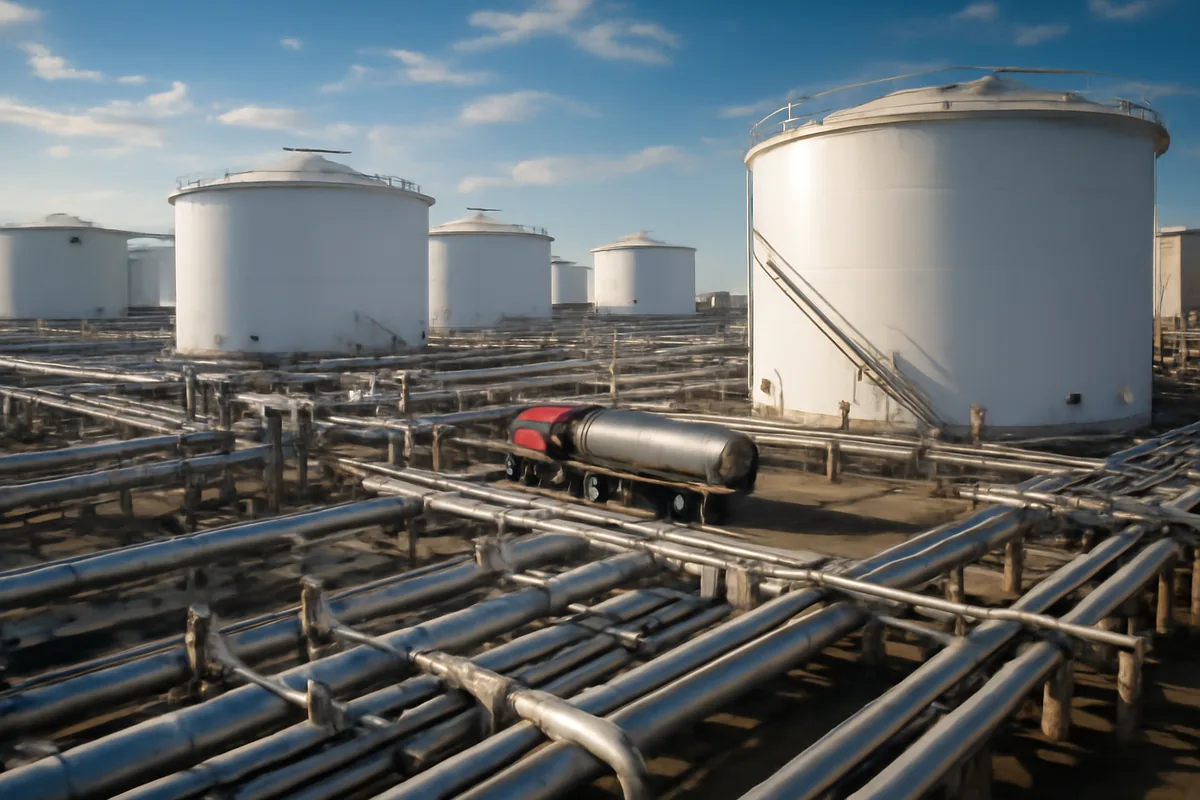
Oil stockpile depletion in 2026 is expected to significantly impact global markets. The reduction in reserves can lead to increased oil prices, affecting economies worldwide. Understanding these dynamics is crucial for businesses and policymakers to navigate the challenges posed by shifting energy supplies and market conditions.
Depleting oil stockpiles typically result in higher prices. As reserves shrink, the supply-demand balance shifts, often leading to price hikes. This can cause consumers to face increased costs, influencing inflation and economic stability. For example, if global oil reserves decrease by 10%, the price per barrel could rise by 15% or more, based on historical data and market elasticity. The oil industry has warned that depleted inventories could dramatically spike gasoline prices, affecting global markets [1].
Consider a scenario where the depletion of reserves leads to a 20% increase in oil prices. If the average gasoline price is $3.00 per gallon, a similar percentage increase would raise the price to $3.60 per gallon. This increase would directly impact transportation costs, subsequently raising prices for goods and services dependent on transportation, such as groceries and consumer electronics.
In 2026, petroleum market trends indicate tighter supply due to stockpile depletion. This trend is driven by geopolitical factors and production constraints. For instance, political instability in major oil-producing regions can further exacerbate supply issues. Additionally, environmental regulations may limit new oil exploration projects, constraining supply.
Geopolitical events play a crucial role in shaping petroleum market trends. Sanctions on major oil producers, such as Russia or Iran, could significantly reduce available global supply, leading to further price increases. In 2026, continued tensions in these regions might result in more volatile oil prices, compelling countries to reassess their energy strategies.
Oil stockpile depletion affects the global energy supply by increasing reliance on alternative energy sources. Countries may accelerate renewable energy adoption to mitigate risks associated with oil price volatility. For example, if oil prices rise by 30%, investment in solar and wind energy could increase by 50% as countries seek more stable and sustainable energy sources.
Countries such as China and India are significantly investing in solar and wind energy. In 2026, China is projected to increase its solar capacity by 20%, reflecting its commitment to reduce reliance on oil. Similarly, Europe aims to have 40% of its energy from renewable sources by 2030, driven in part by oil market uncertainties.
Fluctuations in oil prices due to stockpile changes can destabilize economies. Industries heavily reliant on oil, such as aviation and manufacturing, may face increased operational costs, leading to higher product prices. This can reduce consumer spending and slow economic growth.
Countries can mitigate the impact of oil stockpile depletion by employing several strategies:
| Country | Strategy | Impact on Market |
|---|---|---|
| United States | Boosting strategic reserves | Short-term stability |
| China | Investing in renewables | Long-term sustainability |
| Germany | Energy efficiency improvements | Reduced demand |
Each approach has distinct effects on the global market, reflecting varying priorities and resources. The U.S. focuses on immediate energy security, whereas China and Germany emphasize sustainable development and efficiency.
Germany's Energiewende policy exemplifies a comprehensive approach to energy transition. By increasing its reliance on renewables, Germany aims to cut greenhouse gas emissions by 55% by 2030 compared to 1990 levels. This policy not only addresses energy security but also aligns with global climate commitments.
Oil stockpile depletion in 2026 poses significant challenges to global markets and energy stability. By understanding petroleum trends and adopting strategic measures, countries can mitigate negative impacts and promote economic resilience. Policymakers must balance immediate energy needs with long-term sustainability goals to ensure a stable and secure energy future.
Oil stockpile depletion affects global markets by increasing oil prices due to reduced supply. This can lead to economic instability and higher costs for consumers and businesses.
In 2026, petroleum market trends indicate tighter supplies and increased prices due to geopolitical tensions and production limitations, impacting global economies.
Countries can mitigate the impact by increasing strategic reserves, investing in renewable energy, and enhancing energy efficiency to stabilize economies against oil price volatility.
Rising oil prices can destabilize economies by increasing operational costs for industries, leading to higher product prices and reduced consumer spending.
Renewable energy reduces dependence on oil, mitigating risks from price volatility and ensuring long-term energy sustainability despite oil stockpile changes.
More from Business & Marketing.
Streamline your marketing efforts with a minimal yet effective stack for solo entrepreneurs in 2026.
Discover the effects of C.H. Robinson's acquisition of RXO on the logistics industry, brokerage market changes in 2026, and evolving business strateg…
Explore the exciting updates and trends reshaping drive-thru menus in 2026, from tech to healthier options.