
Taylor Sheridan's Impact on TV: A Powerful Legacy
Taylor Sheridan has reshaped TV with his series success, exemplified by 'Lioness.' Discover how his storytelling and character development have left …
Discover how coastal storms have impacted music festivals in 2026, leading to cancellations and the need for storm preparedness.
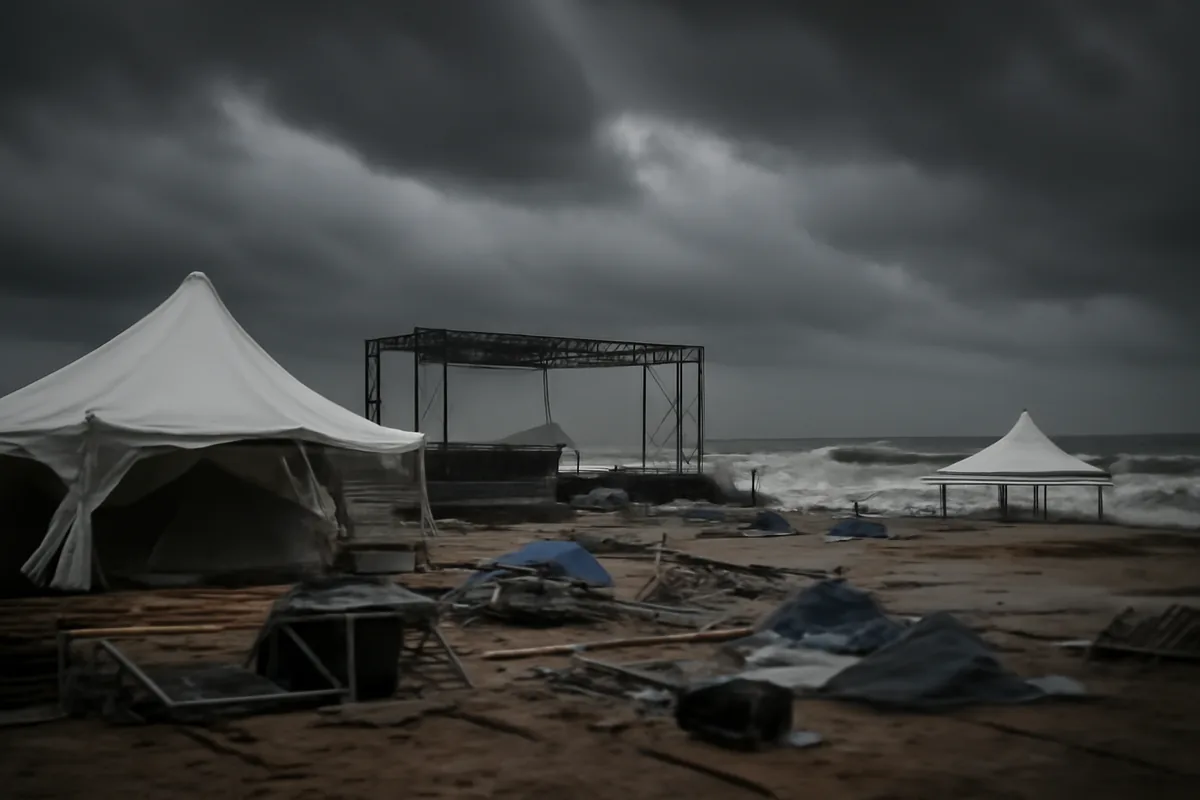
Coastal storms have significantly impacted music festivals in 2026, highlighting the vulnerability of outdoor events to extreme weather conditions. One notable instance is the Oceans Calling Festival in Ocean City, Maryland, which had to cancel its Friday lineup due to severe weather and beach erosion [1][2][3]. The festival, scheduled from September 25-27, 2026, faced challenges from a nor’easter causing high winds and coastal flooding, making it unsafe to proceed with planned activities.
Coastal storms, like nor’easters, bring strong winds, heavy rainfall, and potential flooding, which can disrupt music festivals in several ways. The Oceans Calling Festival experienced such disruptions, with high winds and beach erosion making it impossible to safely complete the festival setup [1][2]. These weather conditions pose risks not only to the infrastructure but also to the safety of performers and attendees.
Weather can play a crucial role in the success or failure of outdoor music festivals. High winds can damage stages and equipment, while heavy rains can flood venues, making them inaccessible. For instance, Ocean City faced winds exceeding 55 mph, affecting the festival's ability to proceed as planned [2]. Flooding and erosion can also lead to cancellations or significant delays.
Stage and Equipment Damage:
High winds and heavy rains can cause severe damage to stages and equipment. Temporary structures used in festivals, such as tents and stages, are particularly vulnerable. For example, a stage collapse due to winds not only halts performances but also poses a serious risk to safety. Equipment like speakers and lighting systems are also at risk, which can lead to high repair costs and logistical challenges in replacing them at short notice.
Venue Inaccessibility:
Flooded terrain can make it challenging for both attendees and performers to reach the venue. Muddy grounds can become hazardous, increasing the risk of accidents. In 2026, the beach erosion at Ocean City served as a stark reminder of how vulnerable coastal venues are to weather events, essentially cutting off sections of the concert area [1].
Impact on Attendance and Revenue:
Weather-related disruptions also affect attendance rates. Even if parts of the event proceed, the uncertainty and discomfort caused by bad weather can deter potential attendees. This reduction in attendance directly impacts the festival's revenue from ticket sales, merchandise, and concessions.
The decision to cancel a music festival is never easy, but severe weather often leaves organizers with no choice. In 2026, the Oceans Calling Festival had to cancel its opening day due to safety concerns and incomplete setups caused by adverse weather [1][2][3]. Events like these often involve automatic ticket refunds, as was the case here, where single-day and partial three-day ticket purchases were refunded [1][3].
Financial Implications:
Cancellations can lead to significant financial losses. Organizers must refund ticket sales, which can be a logistical and financial burden, especially if the event does not have insurance against weather-related disruptions. In the case of Oceans Calling Festival, refunds were processed for Friday's single-day tickets and a third of the three-day passes, impacting cash flow and profitability [1].
Reputation and Future Planning:
Cancellations can also affect a festival's reputation. Organizers must manage public relations carefully to maintain trust and ensure future events are not negatively impacted. Positive handling of cancellations, such as prompt refunds and effective communication, can help mitigate reputational damage.
Festival organizers should have a comprehensive plan for weather-related disruptions. This includes monitoring weather forecasts closely in the days leading up to the event and having contingency plans for shelter and evacuation if necessary.
Weather Monitoring Systems:
Implementing advanced weather monitoring systems can provide real-time data to help organizers make informed decisions. These systems can predict weather conditions more accurately and allow for timely interventions.
Contingency Shelters:
Setting up contingency shelters can provide safety for attendees during unexpected weather changes. These shelters should be clearly marked and communicated to all attendees as part of the entry protocol.
Building resilient infrastructure that can withstand harsh weather conditions is crucial. This might involve using robust materials for stages and ensuring proper drainage systems for the venue.
Robust Construction Materials:
Utilizing weather-resistant materials for stages and installations can reduce the risk of damage. Reinforced stages and waterproof equipment covers can help protect against wind and rain damage.
Proper Drainage Systems:
Ensuring that the venue has adequate drainage systems can prevent water accumulation and erosion. This involves strategic planning of stage locations and pathways to minimize water pooling.
Effective communication is key during a crisis. Keeping attendees informed through social media and official channels can help manage expectations and ensure safety. The Oceans Calling Festival used its official website and social media to update festivalgoers about cancellations and potential rescheduling [1][3].
Real-time Updates:
Using social media platforms and festival apps to provide real-time updates ensures that attendees are informed promptly. This can include weather updates, schedule changes, and safety instructions.
Clear Signage and Announcements:
On-site signage and public announcements can guide attendees during weather disruptions, directing them to shelters or informing them of schedule changes.
The Oceans Calling Festival serves as a case study for understanding the impact of coastal storms on music festivals. Scheduled for late September, the festival was hit by a nor’easter causing significant weather disturbances. The decision to cancel the first day was based on safety concerns for both the festival crews and attendees [1][2][3]. Despite efforts to mitigate the damage, the conditions proved too challenging. Plans were in place to continue with the remainder of the weekend, contingent on weather improvements.
Organizational Response:
Festival organizers coordinated closely with local authorities and meteorologists to assess conditions and make informed decisions. Despite efforts to bolster infrastructure and expedite setup, the persistent storm conditions overwhelmed these measures.
Community and Economic Impact:
The cancellation not only affected attendees and performers but also local businesses. Ocean City relies heavily on tourism-driven events, and such disruptions can have ripple effects on the local economy, affecting hotels, restaurants, and shops that benefit from the influx of visitors.
For the attendees who traveled specifically for the event, cancellations can be disappointing, as expressed by festivalgoers who had eagerly anticipated performances by headliners like Dave Matthews Band and Ludacris [2]. Such cancellations also affect performers who are unable to showcase their talent as planned.
Travel and Accommodation Issues:
Attendees often plan their travel and accommodation months in advance. Cancellations can lead to financial losses for them, as non-refundable bookings may not be compensated.
Performer Contracts and Schedules:
Performers face logistical challenges as well. Scheduling conflicts can arise when trying to reschedule performances, and contractual obligations may complicate matters further.
Coastal storms pose significant challenges to the viability of outdoor music festivals. The 2026 experience underscores the importance of preparedness, communication, and infrastructure resilience. Learning from these events can help future organizers better navigate the unpredictable impacts of severe weather, ensuring both safety and enjoyment for all involved. By investing in robust infrastructure, real-time communication systems, and comprehensive contingency planning, festivals can better withstand the challenges posed by coastal storms."}
Weather conditions can impact music festivals by causing delays, cancellations, or damage to infrastructure. High winds and rains can disrupt performances and lead to safety concerns, making it necessary to cancel or postpone events.
Festival organizers can prepare for storms by monitoring weather forecasts, building resilient infrastructure, and having contingency plans for shelter and evacuation. Effective communication with attendees is also crucial.
Refunds are typically processed automatically for canceled events. For instance, the Oceans Calling Festival issued refunds for single-day and part of three-day tickets purchased directly through their ticket vendor.
The first day of the Oceans Calling Festival 2026 was canceled due to severe weather conditions caused by a nor’easter. Beach erosion and high winds made it unsafe to proceed with the festival setup.
While some festivals can proceed in less severe weather, extreme conditions like strong winds and flooding often necessitate cancellations to ensure the safety of attendees, performers, and staff.
More from Sports & Entertainment.
Taylor Sheridan has reshaped TV with his series success, exemplified by 'Lioness.' Discover how his storytelling and character development have left …
Explore the financial dynamics of Temple of Doom residuals and how they impacted Ke Huy Quan's life and the film industry.
Discover the revelations and insights from Sylvester Stallone's 2026 memoir 'The Steps'.